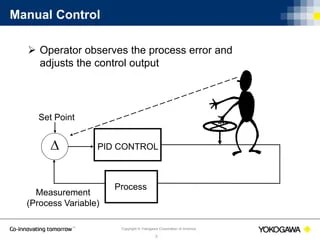
Consider a robotic arm that can be moved and positioned by a control loop A pid control loop involves the following analog variables An electric motor may lift or lower the arm, depending on forward or reverse power applied, but power cannot be a simple function of position because of the inertial mass of the arm, forces due to gravity, external forces on the arm such as a load to lift or work to be done on an external object
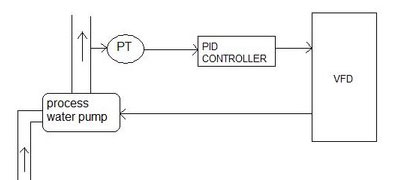
FAQ: How are PID parameters configured for variable frequency drives?
• the sensed position is the process variable (pv).
A pid controller controls a process through three parameters
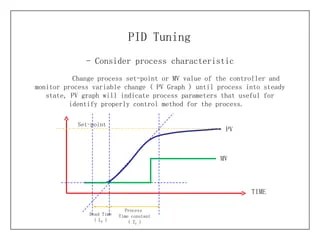
Proportional (p), integral (i), and derivative (d) These parameters can be weighted, or tuned, to adjust their effect on the process. The following list describes the formal names of each pid parameter The parameter that is adjusted is the control variable (cv)
The parameter that responds to a cv change is the process. The process value is the value that is being controlled For cruise control this would be the actual vehicle speed, or in a heating system, this would be the current temperature of the system. It involves a mathematical model of the process that relates the value of the process variable at time t to the current rate of change of the process variable and a history of the controller's output.

Table 1 provides a description of the inputs, outputs, and properties of the pid in cct.
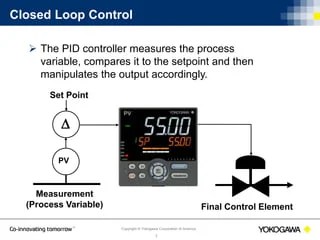
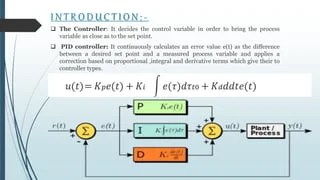
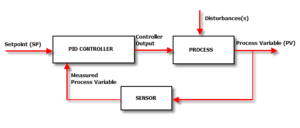
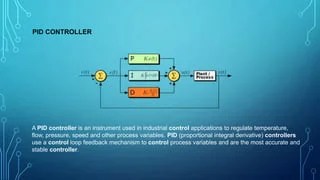
Pid stands for proportional, integral, and derivative Figure 1 shows the basic pid control block diagram The process under control is called the plant The operating point of the plant is called the process.
A pid controller combines proportional control with. It may be temperature, pressure, level, flow, composition, density, the ratio of two streams, etc. This guide delves into the basics and components of pid control, implementation, application examples, impacts, challenges, and solutions aiming.