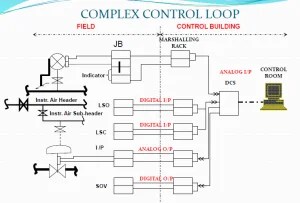
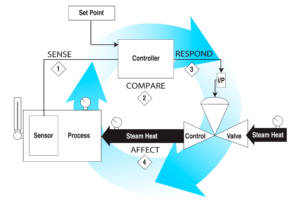
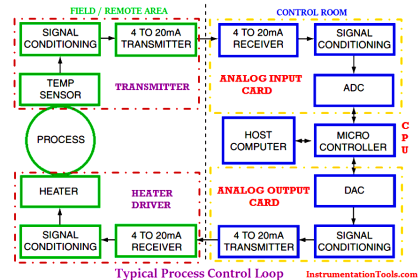
In this control, the loop starts by measuring the process variable (pv) What precautions to be taken for bump test ? It then compares the pv to the desired value, that is, the set point (sp), and acts on the difference between sp and pv (error) using a.
CAN Communication Questions - Controller Area Network
It may be good practice to periodically perform loop check to verify the integrity of the current loop has not degraded over time or range mismatch as a result of device replacement etc
Both are absolutely necessary to verify the reliability and operation of control loops prior to plant commissioning
With regard to the process diagram displayed above, this guide describes the. Loop testing is the method used to verify the integrity and performance of control loops, ensuring that all components—from sensors and transmitters to controllers and actuators—are properly calibrated,. The main purpose of performing a loop test is to validate the integrity and stability of the control logic before deployment Engineers use this method to confirm that programmed algorithms.
A loop check is a test conducted to verify the integrity and continuity of a complete control loop, from the field device (sensor or actuator) to the control system (dcs/plc) and back. Learn how to test and validate a process control loop with six steps that cover simulation, implementation, connection, open mode, closed mode, and validation. Learn the difference between cold and hot loop testing in automation Know when to use each during commissioning and system checks.

Local news, sports, business, politics, entertainment, travel, restaurants and opinion for seattle and the pacific northwest.
Hil simulation must include electrical emulation of sensors and actuators These electrical emulations act as the interface between the plant simulation and the embedded system un